24/7 Customer Assistance
24/7 Assistance with the best medical care at your service

Call us for any question
+91 90858 83067BLOCK-B, PH-1, Sushant Lok Phase I, Gurugram, Haryana 122001
IndiaOffice Hour: 09:00am - 09:00pm
info@medigocare.com
Amygdalotomy surgery is a minimally invasive neurosurgical procedure that targets and ablates overactive circuits in the amygdala — the brain's fear centre — to treat severe, treatment-resistant PTSD, chronic anxiety, and pathological aggression. It's considered a last-resort option for patients who've failed at least two or three classes of psychiatric medication and years of therapy.
I want to start here because I've noticed that a lot of patients arrive with a basic but important question: "Why is my brain doing this to me?" And honestly, that question deserves a proper answer before we talk about surgery.
The amygdala is a tiny, almond-shaped cluster of neurons buried deep inside your temporal lobe. It's part of the limbic system — the emotional engine of the brain. In a healthy, trauma-free brain, it works beautifully. It detects genuine danger, fires the alarm, your body responds, and then it quiets down once the threat has passed.
In people who develop PTSD, something goes wrong with that quieting-down process. The amygdala gets stuck in "danger" mode. It keeps broadcasting emergency signals even when you're sitting safely in your own living room. Scientists call this amygdala hyperactivation, and it's measurable on functional MRI scans — which is exactly why imaging is part of the pre-surgical evaluation.
The amygdala isn't just a one-trick fear machine. It coordinates several critical functions:
When it's overactive, all of these systems go haywire simultaneously. That's why PTSD doesn't feel like a single symptom — it feels like your entire internal world has been hijacked.
Here's what the research actually shows, rather than what a lot of popular science articles oversimplify: trauma doesn't permanently "damage" the amygdala in the way a physical injury damages a knee. What it does is alter the amygdala's threshold for activation. It becomes hypersensitive — almost trigger-happy.
Post-traumatic stress disorder affects roughly 6% to 8% of the general population, and between 31% and 46% of military or highly traumatised civilian populations. And critically, somewhere between 30% and 50% of patients do not respond to standard treatments, leaving them chronically affected by emotional symptoms and significant psychosocial burden.
That's a staggering number of people for whom medications and therapy simply don't work. Those are the people this blog post is really for.

Let me be direct: amygdalotomy surgery sounds terrifying if you've only ever heard "brain surgery" used as a metaphor for something impossibly complex. But the modern version of this procedure is quite different from what that phrase conjures.
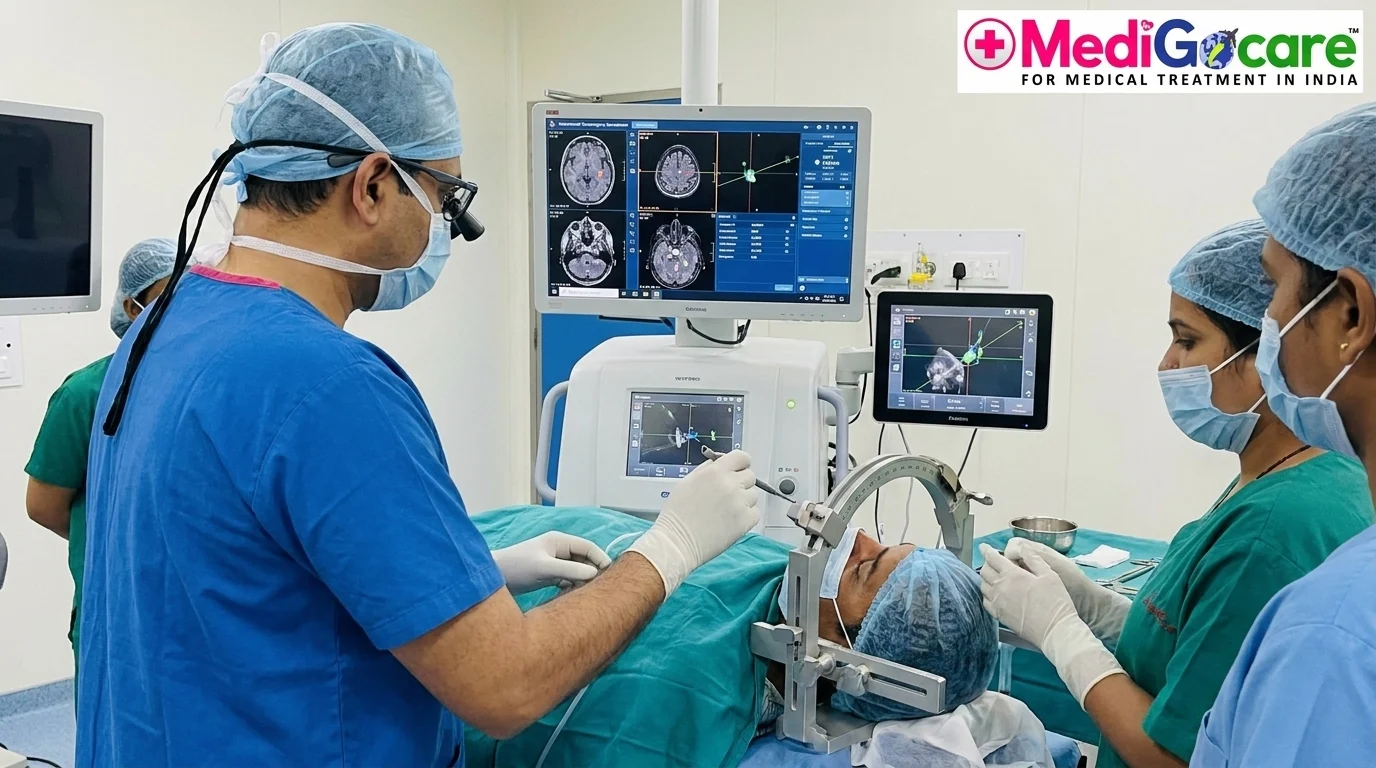
It's not open-brain surgery. There's no large incision. You won't be lying on a table for eight hours with your skull exposed. What actually happens is far more precise — and frankly, a lot closer to a sophisticated guided needle procedure than the neurosurgery of old movies.
The goal is specific: to reduce the pathological overactivity in a defined circuit within the amygdala. Not to remove emotions. Not to flatten your personality. Just to turn down the volume on the misfiring alarm.
Here's what the process looks like from start to finish:
That's it. The whole surgical portion typically takes two to four hours. Most patients are walking within a day.
This is a question I get asked all the time, and it's a fair one. Brain tumour surgery often involves navigating around critical structures, managing bleeding from a mass, and sometimes removing quite large volumes of tissue. It's a very different beast.
Amygdalotomy targets a specific, pre-mapped coordinate in the brain. There's no tumour to remove, no unknown territory to navigate. The precision is the entire point. Compared to traditional open temporal lobe surgery, stereotactic laser amygdalohippocampotomy provides a minimally invasive, highly selective approach that minimises collateral injury and yields a more positive impact on cognition.
So if you're comparing fear levels: amygdalotomy, done by the right surgeon, is significantly less invasive than what most people picture when they hear "brain surgery."
This is where I want to be genuinely honest with you, because I think some medical tourism content oversells the accessibility of procedures like this. Amygdalotomy is not for everyone with PTSD. It's not even for most people with PTSD. It's specifically for a subset of patients who've genuinely exhausted the conventional treatment pathway.
And that's not a flaw in the procedure — it's appropriate clinical gatekeeping that protects patients.
You might be a candidate if you have one or more of the following:
Surgery will likely not be recommended if:
At Medigocare, no patient is cleared for surgery without completing a thorough multi-stage evaluation:

I'll give you the honest answer: no surgery carries zero risk. Anyone who tells you otherwise is either uninformed or being misleading. But "risk" needs to be understood in context — specifically, in comparison to the ongoing risk of living with severe untreated PTSD, which carries its own serious consequences including suicide, substance abuse, and total social breakdown.
The research base on amygdalotomy is smaller than we'd all like — it's a relatively rare procedure — but what exists is genuinely encouraging:
The overall improvement in symptoms across published clinical series has been reported to range between 33% and 100%, with most authors reporting 70–85% improvement. That's a wide range, and it reflects how diverse the patient populations and surgical techniques have been across different eras and centres.
The most compelling modern evidence comes from a landmark 2020 case series (PMID: 32259241) published in Neurosurgery, the official journal of the Congress of Neurological Surgeons. Washington University neurosurgeon Dr. Jon T. Willie and colleagues were able to eliminate PTSD completely for a Vietnam veteran who had suffered PTSD for decades, and also successfully treated a civilian PTSD patient who had witnessed extreme violence. Both patients experienced immediate benefits and no longer fulfilled diagnostic criteria for PTSD.
The key was recognising that the right amygdala can be the source of persistently abnormal activity that interferes with safety learning. Ablating the right amygdala using laser interstitial thermal therapy (LITT) alleviated excessive fear responses and facilitated safety learning.
That's extraordinary. Two patients — decades of suffering — and essentially gone after one targeted procedure.
The documented risks from the literature include:
In the majority of reviewed clinical series, stereotactic amygdalotomy did not compromise a patient's learning, language, and intellectual capabilities. That's an important finding — the specific anxiety circuit is targeted without broadly affecting cognition.
Here's a perspective that I think deserves to be said plainly: for a patient who has spent ten years trying every medication, every therapy, and is still experiencing daily flashbacks, panic attacks, and is unable to maintain relationships or employment — the risk profile of a minimally invasive surgical procedure looks very different than it does for someone being offered optional cosmetic surgery.
Risk should always be weighed against the alternative, which in this case is continued, profound suffering. That's a conversation every patient should have with both their psychiatrist and the neurosurgical team before making any decision.
I've worked in medical facilitation long enough to say this without hesitation: India's functional neurosurgery infrastructure has genuinely caught up with — and in some areas surpassed — what's available in many Western countries. And the cost differential is extraordinary. Let me take these one at a time.
India produces some of the world's most technically accomplished neurosurgeons. Many of India's top functional neurosurgeons have trained at institutions in the United States, United Kingdom, and Germany before returning. They bring that international exposure back to hospitals equipped with the same technology you'd find at a top-tier American medical centre.
The surgeons Medigocare works with in Gurgaon, Delhi, and Mumbai use stereotactic frame and frameless neuronavigation systems, intraoperative MRI, and LITT laser ablation systems — the same toolkit used in cutting-edge research centres like Washington University in St. Louis and Emory University.
This is the number that stops most people in their tracks. Let me lay it out clearly:
| Country | Estimated All-In Cost (USD) | Typical Wait for Referral |
|---|---|---|
| United States | $50,000 – $100,000 | 2–4 years (if approved) |
| United Kingdom (NHS) | Rarely approved; private: £35,000+ | Often indefinite |
| Germany / Western Europe | €40,000 – €80,000 | 2–3 years |
| India (via Medigocare) | USD 9,000 – 12,000 | 4–8 weeks from enquiry |
The Medigocare package includes surgeon fees, anaesthesia, operation theatre charges, 2–3 days hospital stay including an ICU night, all pre-surgical diagnostics, scans, post-surgery medication during the hospital stay, and a discharge summary with fit-to-fly certificate. There are no hidden costs.
In most Western countries, getting a referral for a functional neurosurgery procedure like amygdalotomy involves convincing a psychiatrist, convincing a GP, getting approval from a specialist committee, and potentially being told the procedure isn't available in your public health system at all. The timeline can stretch to years — years during which you're still suffering.
In India, the process from initial enquiry to surgical date typically takes four to eight weeks. That includes all the required evaluations.
The hospitals Medigocare partners with hold Joint Commission International (JCI) accreditation — the gold standard for healthcare quality recognised globally. These aren't compromise facilities. They have the same technology, sterility protocols, and surgical safety standards as leading hospitals in the United States or Europe.
India has a specific Medical Visa category for international patients, which allows extended stays and multiple entry. Medigocare handles the official hospital invitation letter required to apply for this visa, and our team supports you through every step of the documentation process. Patients from over 80 countries have come to India for treatment through our network.
Many medical tourism companies hand you a hospital name and a PDF. We don't work that way. Medigocare provides airport pickup, accommodation within 5 kilometres of the hospital, daily coordination between you and the medical team, interpreter services in multiple languages, and family liaison throughout the recovery period.
This one matters more than people realise: surgical outcomes are directly correlated with procedure volume. The more times a surgical team performs a specific procedure, the better their results. India's private neurosurgery centres handle a volume of complex functional cases that gives their teams genuine, deep experience with procedures like amygdalotomy, DBS, and LITT — procedures that might be performed just a handful of times per year at equivalent Western centres.

Hello everyone, my name is Rafael, I'm from Brazil and I've been facing some health issues. So I reached out medical care for assistance. I must admit that at first I was a little apprehensive.
However, I did an extensive research on the company and after that I decided to choose them. Once I started to communicating with their team, so I did an amygdalotomy procedure with Dr. Rimansu Champaneri to treat my PTSD and high anxiety. The entire team, the medical care team and the hospital team was incredibly attentive.
First, they helped me to get the medical visa and they picked me up from the airport to my hotel and they intermediaries with the hospital to coordinate all my constellations, tests, exams and the surgery itself. They made me feel completely comfortable, even though I was feeling very anxious. The surgery was a success.
I'm currently recovering and I'm recording this video to personally attest that this is a reputable company and you can truly trust. If you are facing any health issues or dealing with anxiety, flashback, trauma and social anxiety or any illness, it is absolutely worth seeking treatment in India. They have the best medical professionals here.
I highly recommend choosing medical care for whatever health issues, challenges you may be going through. So, don't give up, keep fighting and you will find the solution you are looking for. And contact medical care today.
So, I really thank to Mr. Kuldeep, Mr. Vijay, Mr. Santos and Mr. Raju. Along the treatment, they helped me to explore India. We went to Taj Mahal, we went to the temple to Krishna, the god Krishna and I enjoyed this time with them.
You've read this far because you're serious. So let me be equally serious about what we actually do — not just the glossy version.
Medigocare is a fully accredited and certified medical tourism company based in Gurgaon, Haryana. We don't own hospitals. We don't employ the surgeons. What we do is serve as your trusted local partner — the people who know the Indian healthcare system inside and out, who've built relationships with the right surgical teams, and who make sure nothing falls through the cracks while you're in a foreign country dealing with a major health situation.
If you'd like to explore our full range of brain and spine surgery treatments, including our dedicated amygdalotomy surgery page, you'll find detailed information about the hospitals and surgeons we work with. We also facilitate Gamma Knife treatment for appropriate cases, and our online doctor consultation service means you don't have to wait until you're on Indian soil to start getting specialist input.
| Component | Included? |
|---|---|
| Neurosurgeon & anaesthesia fees | ✅ Yes |
| Operation theatre charges | ✅ Yes |
| Hospital stay (2–3 days) | ✅ Yes |
| First-night ICU monitoring | ✅ Yes |
| All pre-surgical diagnostics & MRI | ✅ Yes |
| Post-surgery medication (in-hospital) | ✅ Yes |
| Hospital invitation letter for Medical Visa | ✅ Yes |
| Airport pickup and drop-off | ✅ Yes |
| Discharge summary & fit-to-fly certificate | ✅ Yes |
| 24/7 Medigocare coordinator access | ✅ Yes |
| Accommodation (hotel) | Arranged separately — see our accommodation service |
| Flight tickets | Not included — we can refer to trusted travel partners |
| Post-discharge outpatient medication | Not included — arranged via our medicine service |

I want to arm you with the actual science here, not just the summary. If you're considering surgery, you should have enough background to have an informed conversation with your own doctors.
The foundational modern paper is the 2020 case series by van Rooij, Willie, and Bijanki, published in Neurosurgery (PMID: 32259241). This was the first prospective investigation of the effects of amygdala ablation on PTSD. The authors described 2 patients in whom highly selective right amygdalohippocampotomy for epilepsy was associated with profound improvements of both symptoms and biological markers of established PTSD. Both patients went from meeting full DSM diagnostic criteria for PTSD to no longer meeting them post-procedure.
By targeting the persistent amygdala hyperactivation observed in treatment non-responders, amygdalotomy likely reduces hyperarousal, making trauma-focused therapy more tolerable and effective. This is an important nuance: the surgery isn't meant to do everything. It lowers the neurological "noise" so that therapy — which patients previously couldn't engage with effectively — becomes viable.
A broader systematic review of 13 clinical series on stereotactic amygdalotomy for severe aggressive behavioural disorders concluded that stereotactic amygdalotomy can be considered a valid surgical treatment option for carefully selected patients with medically refractory aggressive behavioural disorders, and that recent advances in imaging and stereotactic navigation can further improve outcomes and minimise the complication rate.
For the deeper dive, I'd recommend reading:
No — and this confusion comes up a lot, understandably. Lobotomy is a historical procedure, largely abandoned by the 1970s, that involved severing or destroying large portions of the prefrontal cortex with very blunt tools and almost no precision. It caused widespread personality changes, cognitive damage, and emotional flatness — and rightly became one of medicine's cautionary tales.
Amygdalotomy is something entirely different. It's a highly targeted intervention using GPS-guided navigation to affect a specific, pea-sized target within the amygdala — leaving everything else completely untouched. The comparison is a bit like comparing a modern arthroscopic knee surgery to an old-fashioned amputation. Same general neighbourhood; completely different era and technique.
The word "cure" is genuinely complicated in psychiatry, and I'd be doing you a disservice to use it carelessly. What the evidence shows is that appropriately selected patients experience significant, lasting reductions in PTSD symptom severity — in some cases, complete resolution of diagnosable PTSD. Most improvements reported in studies are maintained at long-term follow-up.
But "permanent" depends on many factors, including whether underlying trauma is processed through continued therapy post-surgery. The procedure reduces the neurological interference; therapy helps the brain learn new, safer patterns. Many functional neurosurgeons recommend combining surgical intervention with structured post-operative psychotherapy for optimal long-term outcomes.
The surgical portion itself typically takes two to four hours, depending on whether unilateral (one side) or bilateral (both sides) ablation is planned, and the specific navigation technique used. Pre-operative preparation adds one to two hours. Most patients are in the recovery room by early afternoon on the day of surgery.
This is a question I respect people for asking before surgery. It means they're thinking clearly. The honest answer: if amygdalotomy doesn't produce the hoped-for result, there are other functional neurosurgery options. Deep Brain Stimulation (DBS) of the amygdala is being actively researched for PTSD, with a 2024 study showing promising long-term results. Vagus Nerve Stimulation (VNS) is another modality. Repeat amygdalotomy is rarely performed but has been done in exceptional cases.
We discuss all of this with every patient during the evaluation phase, so that the decision to proceed is made with full awareness of what the alternative paths look like.
Amygdalotomy is not "illegal" in most countries — but it's rarely performed or approved for PTSD in Western public health systems because it's classified as experimental for that specific indication. In India, it's performed legally within strict ethical guidelines under the oversight of institutional review boards. International patients travelling to India for this procedure do so within a completely legal framework. Medigocare facilitates the official Medical Visa process accordingly.
The terms are often used interchangeably in the literature, which creates understandable confusion. Strictly speaking, amygdalectomy means complete removal of the amygdala, while amygdalotomy refers to a lesion or ablation within the amygdala — not full removal. Modern stereotactic procedures are almost always amygdalotomies, not amygdalectomies, because partial ablation of the specific overactive circuit achieves the therapeutic goal with far less disruption.
In most cases, yes — though the surgical team will review your current medication regimen carefully and may adjust it in the days before surgery. Some medications affect anaesthesia or bleeding risk. Your psychiatrist will work closely with the neurosurgical team to manage your medication throughout the perioperative period. You should never stop psychiatric medication abruptly without medical guidance.
The published research base is mostly on PTSD from specific traumatic events (combat, assault, witnessed violence). C-PTSD — which develops from prolonged, repeated trauma like childhood abuse or long-term domestic violence — involves more complex neural changes. However, since amygdala hyperactivation is common to both conditions, many functional neurosurgeons believe the procedure has potential for carefully selected C-PTSD patients. This is discussed in detail during the pre-surgical psychiatric evaluation.
Here's a practical week-by-week guide based on what our patients typically experience:
Amygdalotomy surgery is used to treat severe, treatment-resistant PTSD, chronic anxiety, complex PTSD (C-PTSD), and pathological aggression. It's a last-resort option for patients who haven't responded to at least two to three psychiatric medication classes and intensive therapy. It's not offered to anyone who hasn't genuinely exhausted conventional treatment options first.
Yes. India offers amygdalotomy surgery through specialised functional neurosurgery centres in Delhi, Gurgaon, and Mumbai. Indian neurosurgeons use stereotactic frame and frameless neuronavigation systems with radiofrequency or laser ablation (LITT) for high precision. Medigocare facilitates this for international patients from over 80 countries.
You may qualify if you have long-standing treatment-resistant PTSD (3+ years), have failed 2–3 psychiatric medication classes, have MRI-confirmed amygdala hyperactivity, and have a psychiatric recommendation for surgical intervention. Medigocare provides a free assessment to evaluate your case — submit your records through our contact page and we respond within 48 hours.
Modern stereotactic amygdalotomy is minimally invasive with a very small incision. Key risks include temporary memory changes, rare infection, and approximately 3–5% risk of new-onset epilepsy (which often resolves within months). In the majority of published clinical series, the procedure didn't compromise patients' learning, language, or intellectual capabilities. When performed by experienced functional neurosurgeons using neuronavigation, it carries a high overall safety profile.
Published clinical series report 70–80% meaningful symptom reduction in appropriately selected patients. A landmark 2020 study in Neurosurgery Journal (PMID: 32259241) documented complete PTSD resolution in 2 patients treated with right amygdalohippocampotomy via laser ablation. Broader multi-series reviews of amygdalotomy for aggressive behavioural disorders show 70–85% improvement across over 1,000 cases studied.
The all-inclusive cost of amygdalotomy surgery in India through Medigocare ranges from USD 9,000 to 12,000. This includes surgeon fees, hospital stay, ICU monitoring, all diagnostics, and medication during the hospital stay. The same procedure costs USD 50,000–100,000 in the USA — a saving of over 70% with no compromise in clinical quality.
Most patients walk within 24–48 hours of surgery. Hospital stay is approximately 2 days. Full recovery and return to daily activities typically occur within 4–6 weeks. Emotional and behavioural improvements may continue to emerge over 3–6 months post-surgery as the brain recalibrates. Medigocare recommends a 15-day total India stay before flying home.
Yes. Medigocare specialises in medical tourism for amygdalotomy surgery, providing full support including official hospital invitation letters for the Indian Medical Visa, airport pickup, hotel accommodation near the hospital, interpreter services in multiple languages, and a fitness-to-fly certificate before departure. We've helped patients travel from Kenya, Nepal, Tanzania, the UK, Canada, and over 80 other countries.
In the majority of clinical series, stereotactic amygdalotomy did not compromise learning, language, or intellectual capabilities. Some patients report mild, temporary short-term memory fluctuations immediately post-surgery, which typically resolve within weeks. Modern precision techniques using neuronavigation significantly minimise any collateral impact on surrounding brain structures.
Yes. Amygdalotomy is performed in India under strict ethical guidelines requiring psychiatric diagnosis confirmation, multi-disciplinary team review, documented treatment failure, and formal ethical clearance from the hospital's institutional review board. Every case Medigocare facilitates goes through this complete ethical review process before any surgical authorisation is granted.
Lobotomy was a historical, largely discredited procedure that destroyed large areas of the prefrontal cortex with minimal precision, causing widespread personality and cognitive changes. Amygdalotomy is a modern, GPS-guided procedure that ablates only a specific, tiny circuit within the amygdala using laser or radiofrequency energy — leaving all surrounding tissue completely untouched. The two procedures are not comparable in approach, precision, or risk profile.
If you've read this far, you're probably someone who's been searching for answers for a long time. Maybe you've been told there's nothing more that can be done. Maybe you've been passed from doctor to doctor. Maybe you're researching this on behalf of someone you love who's been suffering for years.
Whatever brought you here: there is a next step. And it starts with a conversation, not a commitment.
Medigocare offers a completely free, no-obligation preliminary case assessment for amygdalotomy surgery in India. You share your medical history with us. Our clinical team reviews it — typically within 48 hours. We give you an honest opinion on whether you might be a surgical candidate, and what the evaluation process would look like if you chose to move forward.
You can also explore our broader medical services, learn more about our philosophy and what sets us apart, or read testimonials from patients who've made this journey. And if you need immediate support, our team is available by WhatsApp at +91-90858-83067, or by email at info@medigocare.com.
We're also reachable through our global offices — in Gurgaon (India), Dar es Salaam (Tanzania), and Kathmandu (Nepal) — so wherever you are, you're not far from a real person who can help.
What you need to submit:
What happens next: Our clinical coordinator contacts you within 48 hours with a preliminary assessment and, if appropriate, proposes next steps.
📞 WhatsApp: +91 90858 83067 | ✉️ info@medigocare.com
Amygdalotomy surgery is a rare, specialised neurosurgical procedure indicated only for a carefully selected subset of patients with severe, treatment-resistant psychiatric conditions. This article is for general educational and informational purposes only. It does not constitute medical advice, a diagnosis, or a treatment recommendation. Results vary significantly between individuals. A comprehensive in-person clinical evaluation — including psychiatric assessment, neuroimaging, and multi-disciplinary team review — is mandatory before any surgical decision is made. Medigocare does not perform surgery; we facilitate connections between international patients and accredited surgical centres in India. Always consult your own qualified medical professionals before making any treatment decisions.

Sources & References:
PMID: 32259241 | PMC3400485 | PMID: 18590383 | APA — What is PTSD
24/7 Assistance with the best medical care at your service
Quality treatment with professional & unmatched personal care
Our experts make your Communication easier and more transparent